Product Feed Compliance for AI Shopping: The Eligibility Checklist
AI shopping surfaces only recommend products whose feeds pass spec. The field-by-field eligibility checklist: identifiers, price, variants, and policy data.

AI shopping surfaces only recommend products whose feeds pass spec. The field-by-field eligibility checklist: identifiers, price, variants, and policy data.
AI describes your brand wrong when its sources disagree. A five-step fix: audit every answer engine, reconcile the properties you control, correct the sources AI trusts.
No AI-specific product schema exists. Here are the Product + Offer JSON-LD fields, GTIN rules, and variant modeling deciding whether AI engines recommend your SKUs.
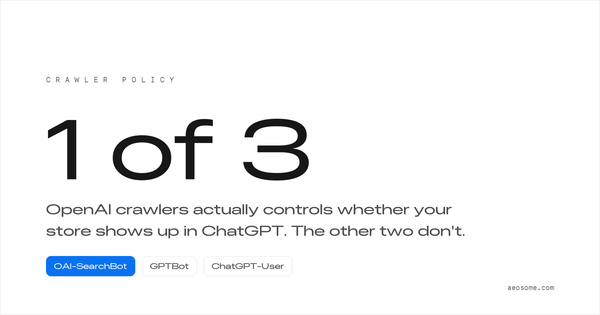
Blocking GPTBot stops model training, not ChatGPT Shopping. See what each AI crawler controls and what your eCommerce store should actually block in robots.txt.
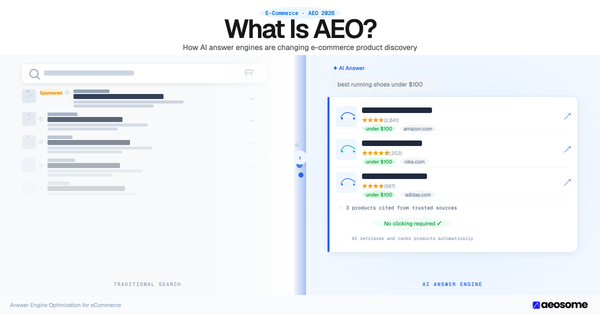
AEO helps e-commerce brands get cited by AI search tools. 31.3% of Americans now use generative AI search — here's what it means for your store's revenue.
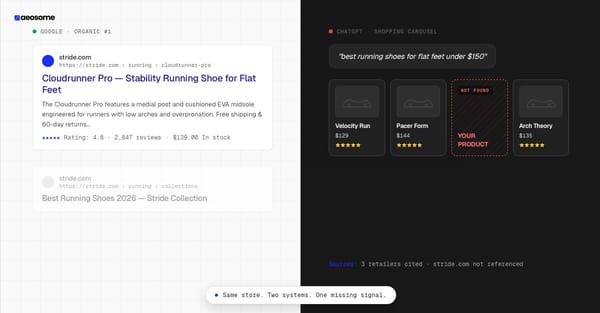
ChatGPT doesn't rank pages, it selects products from structured feeds. Strong Google rankings don't transfer. Four specific signals determine who appears in AI shopping carousels.
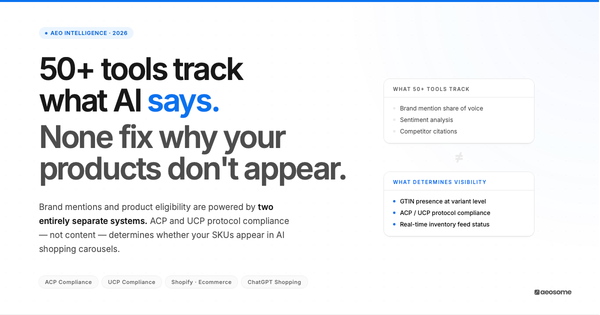
50+ tools track AI brand mentions. For ecommerce, that solves the wrong problem entirely. Brand mentions don't drive product recommendations. Here's what actually does.
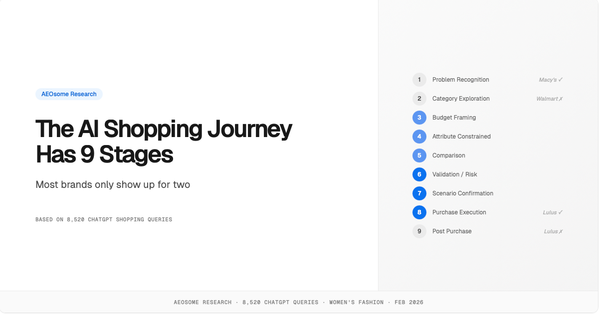
AI search has 9 intent stages. Each drives different carousel rates and brand outcomes. Most brands show up for just two. Here's what it takes to appear across all 9.
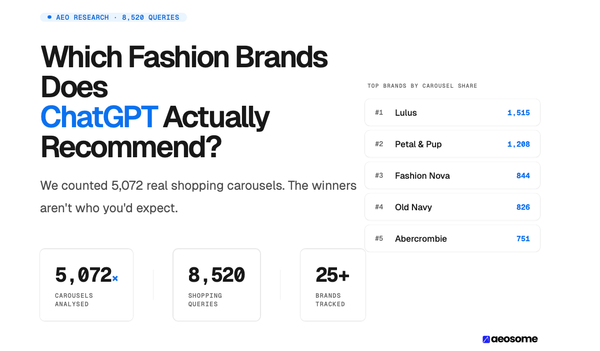
We analyzed 5,072 ChatGPT shopping carousels. The winner isn't Zara or ASOS — it's Lulus, a mid-size DTC brand. The pattern has nothing to do with brand recognition.
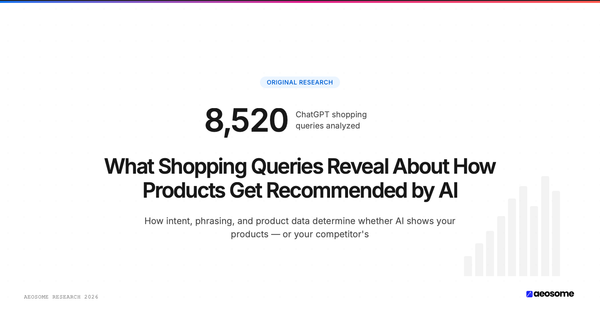
We analyzed 8,520 ChatGPT shopping queries. Only ~60% triggered a product carousel. Intent stages vary by 90 points. Here's what drives AI recommendations.